


Personal Branding for Real Estate Leaders: A Lesson From Blueprint 2026


Heather Elias, Chief Growth Officer at Elm Street Technology, went into prep for her panel at Blueprint: The Future of Real Estate expecting to talk about product architecture and brand strategy. That's not how it went.
"Wait, you want me to talk about my OWN brand?" was her reaction, and it's also where the conversation on the Innovation Stage actually landed. The panel, hosted by Martin Kelly, President of Blueprint, brought Heather together with Ryan Elazari (Founder and Host of CRE Unplugged), Lilian Chen (Founder and CEO of Proptimal), and Lauren Stinson (Founder of LL Creative Solutions) to dig into a question a lot of companies are running into right now: as the lines between B2B and B2C blur, and individual leaders inside companies build their own audiences, what does that mean for how people actually engage with a brand, personal or corporate, in 2026 and beyond?
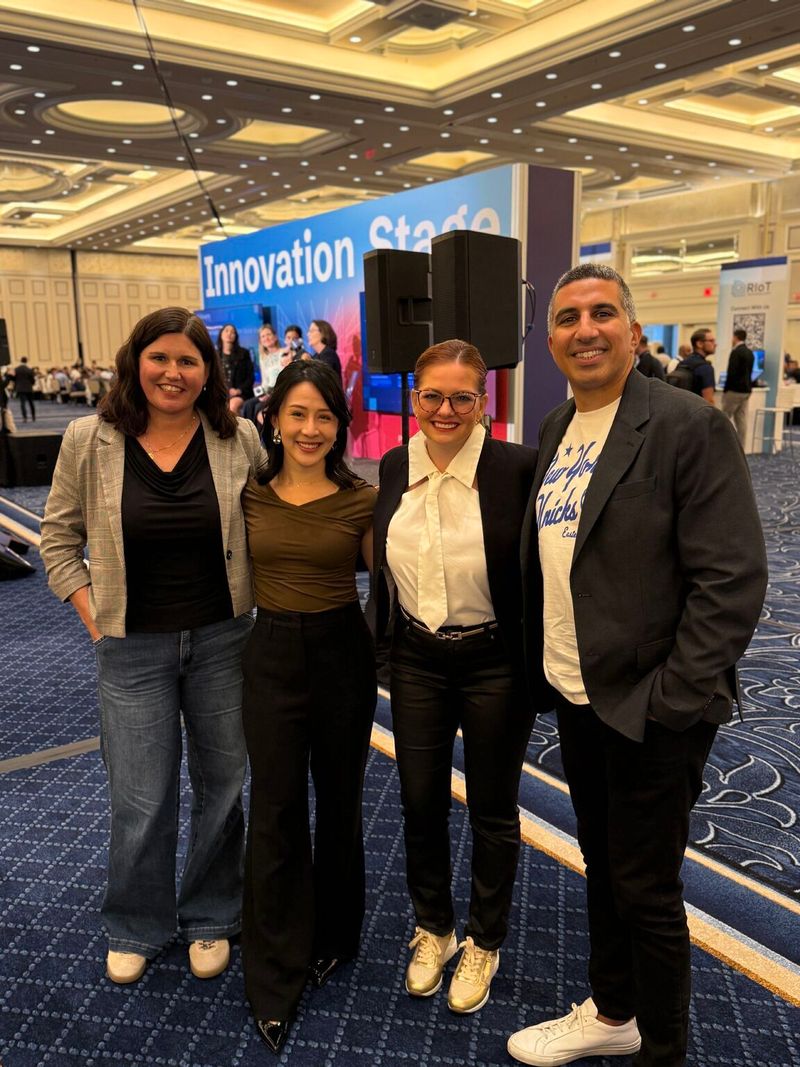
Rather than the framework for other people's brands she'd originally prepared, Heather ended up telling the story of her own personal brand, one she built with intention over two decades in real estate.
It started as a workaround, not a strategy
Heather got her real estate license in 2004, and she's still a licensed agent today. She had a journalism degree and four children under the age of six, including one who wasn't yet a year old. Hiring babysitters or leaving the house to build a client base wasn't realistic, so she looked for another way in.
"I was trying to figure out how I could grow my business in this community without needing to hire babysitters or leave my house, and that's when I started blogging," Heather said. This was content marketing before the term was common, before Facebook, well before TikTok. It wasn't a branding exercise. It was a practical answer to a real constraint, and one she stuck with.
That early blogging became the foundation of a personal brand that kept evolving alongside her career, through years of growing real estate expertise and, eventually, into her current role at Elm Street, where she oversees sales and marketing across six product brands and one overarching corporate brand. On stage, she also shared how that same consistency eventually grew her LinkedIn following past 700,000 people, a number that makes her closing advice land a little differently: this isn't a theory, it's what sustained effort actually produced. The question she's wrestling with now isn't how to start a personal brand. It's how a personal brand fits alongside the brand of the company she leads, which is exactly the tension the panel was built to explore.
In the lead-up to Blueprint, she described that tension directly. "Every post I write now can be read in two ways: as me, and as Elm Street's Chief Growth Officer," she wrote. "Most of the time, that's not a conflict. However, sometimes I hesitate and hold back an opinion I'd have posted without a second thought a decade ago. Not because I don't believe it, but because I don't just speak for myself." She was candid that she hadn't fully worked it out. "I don't think I've fully solved it," she wrote. "And it's worth talking about."
Why this matters for real estate agents, and beyond
Heather's story starts as an agent's, so it lands directly for any agent who has ever tried to build a client base with more hustle than budget. But Blueprint's panel wasn't built for agents alone. The room was owners, operators, and developers making decisions about technology and operations, proptech companies building for this industry, and investors backing the next wave of real estate technology. For that audience, the panel's premise, that personal and company brands are increasingly blurred, hits just as close to home. Founders, executives, and operators are building personal reputations whether they mean to or not, and those reputations shape how much people trust the companies behind them.
Heather's advice: go slow, on purpose
When the panel reached its final question, what advice she would leave the audience with, Heather knew exactly what she wanted to share.
"Building a personal brand is not an instant gratification activity. This takes time, and it takes dedication. Go for depth, not breadth. Don't lean into the viral. Lean into the solid brand building work over time, and don't give up on it. Lean in."
It's a simple idea, but not an easy one to sit with in an industry that often rewards whoever posts the loudest or most often. Heather's point is closer to the opposite: consistency and depth compound in a way a viral moment doesn't.
The room agreed. Throughout the rest of the conference, attendees she'd never met sought her out just to tell her they appreciated the transparency, that she'd said something real instead of the polished answers panels like this one can sometimes produce. It's a small thing, but it's also exactly the point: depth and honesty are what people actually remember.
Key takeaways
- Personal brand often starts as a workaround, not a formal strategy, but that doesn't make it any less intentional.
- Personal and company brand aren't competitors, a strong individual reputation can reinforce trust in the business behind it.
- Depth beats breadth. Consistent presence builds more durable trust than chasing viral moments, and it compounds, in Heather's case, into a following of more than 700,000 people.
- This applies at every level, from agents building a client base to founders and operators leading companies.
Where Elm Street lands on this
This is exactly how we think about brand at Elm Street. It isn't earned in a single campaign or a single post, it's built consistently, over time, by the people who keep showing up, whether that's an individual agent, a founder, or a company like ours. Heather's panel was a reminder that the same principle that builds a client base builds an industry reputation: show up, keep showing up, and let the depth do the work.


